


A Weekend in the Yiddish Alps
Posted On : March 16, 2026
by Bobbie Semple
Erica’s note: The last time I was in the Catskills, I was a young teenager on a dude ranch trip, and EVERYTHING has changed. My daughter and her boyfriend escaped upstate for a dreamy Valentine’s weekend, and I asked her for a travelogue. Her itinerary? Absolutely perfect!
My boyfriend suggested we skip traditional Valentine’s gifts and go away for the weekend instead. Truly, nothing makes me happier. I will choose a shared experience over a wrapped box every time. Within minutes, I had opened the Notes app, built a color-coded planning spreadsheet, and started dropping pins in Google Maps. I am my mother’s daughter, after all.
By Saturday morning, we had packed the car, secured the first of many coffees, queued up his favorite podcast, TrueAnon, and headed north.
We have both been moving at full speed lately, calendars double-booked, dinners scheduled three weeks out, work that spills into weekends. This trip was less about doing everything and more about stepping outside the noise.
We drove past Kingston and kept going, about fifty miles further west, trading buzzy Catskills towns for something quieter, snowier, more intimate. The roads curved through white-dusted hills and wide-open valleys, telephone wires cutting clean lines across a pale winter sky. Somewhere along the way, we fell into that easy rhythm of pointing out houses we loved. “That one.” A white farmhouse with smoke curling lazily from its chimney. A cedar cabin half-hidden by pines. A sagging red barn that felt like it held a century of stories.
The Yiddish Alps
On Saturday afternoon, wandering down Main Street in Livingston Manor, we came across a small plaque referring to the region as the “Yiddish Alps.” It stopped us mid-step.
The name is not ironic. In the early and mid-20th century, Jewish families from New York City escaped to the Catskills in droves, building bungalow colonies and filling grand resort hotels across the mountains. The region became a cultural hub later known as the Borscht Belt, a place where Yiddish was spoken freely, comedians sharpened their acts, and entire summers unfolded between dining halls and dance floors. “The Yiddish Alps” was an affectionate nickname that nodded to both the mountain landscape and the European roots many families had left behind. Standing there in the cold, reading that plaque, it felt less like trivia and more like a quiet inheritance.
I consider myself a cultural Jew, very much a Jew for the food. My mother’s brisket, cooked low and slow until it collapses onto itself. My aunt’s charoset at Passover, sticky with apples and walnuts, which I inevitably eat by the spoonful long after the matzah has lost its appeal. That’s the Judaism I was raised on, sensory, generous, story-filled. Still, reading about generations who built entire summers in these mountains made something feel quietly connective, as if the landscape had been holding those memories all along.
We based ourselves between Livingston Manor and Callicoon, two towns that feel confident without being performative.
Where We Stayed
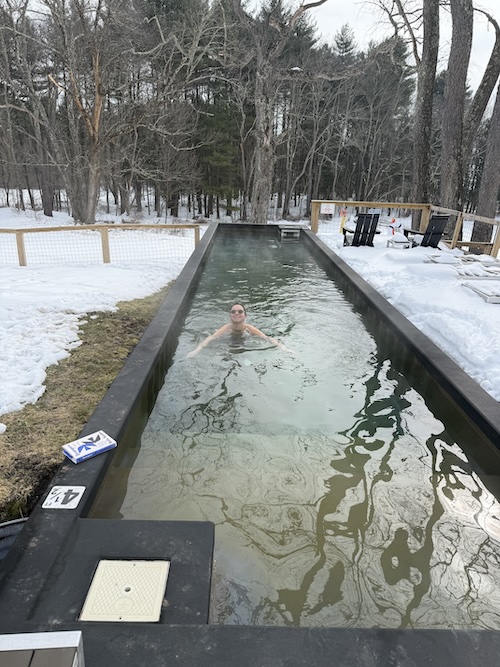
We checked into Rest Co., a renovated chicken coop turned boutique hideaway tucked into the trees just outside town. With only a handful of rooms, fittingly called “coops,” the property feels deeply personal, like you have stumbled onto a very good secret. Inside, warm wood, soft lamplight, linen bedding in muted tones. Minimal, but in that intentional way that makes everything feel chosen. Outside, a heated pool steamed dramatically against the winter air. On Sunday morning, we ran from our room and plunged in. Snow blanketed the ground. The mountains sat still in the distance. The water wrapped around us like a shock and a hug at the same time. It wakes you up. It quiets you down.
Saturday in Livingston Manor
We devoted Saturday to wandering Livingston Manor with no agenda beyond caffeine and curiosity.
At The Walk In, we ordered a biscuit drizzled in hot honey that I am still thinking about, salty, sweet, lightly crisped at the edges. We stood outside with our coffee cups, warming our hands, pretending, briefly, that we were locals with nowhere else to be.
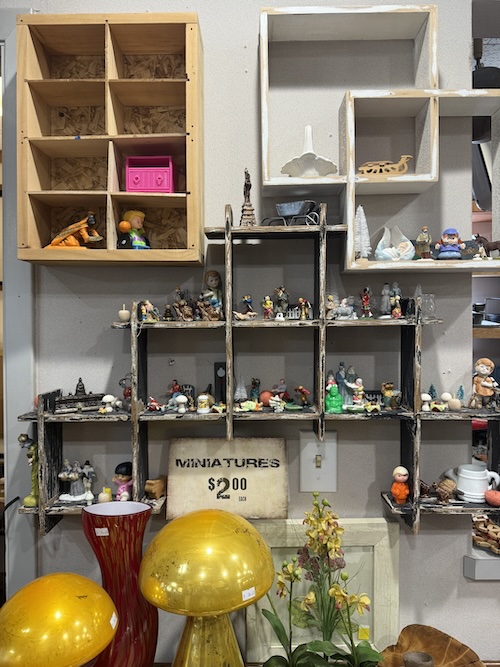
At Life Repurposed, a family-owned vintage shop humming with personality, Dan found vintage glassware, a one-dollar tie, and seriously contemplated a set of reindeer horns he referenced no fewer than six times over the weekend. Every object felt like it had already lived a full life somewhere else.
Seasons was beautifully curated, adult and children’s pieces that felt sophisticated but wearable, cozy without trying too hard. The children’s section in particular felt like a love letter to small-town winters.
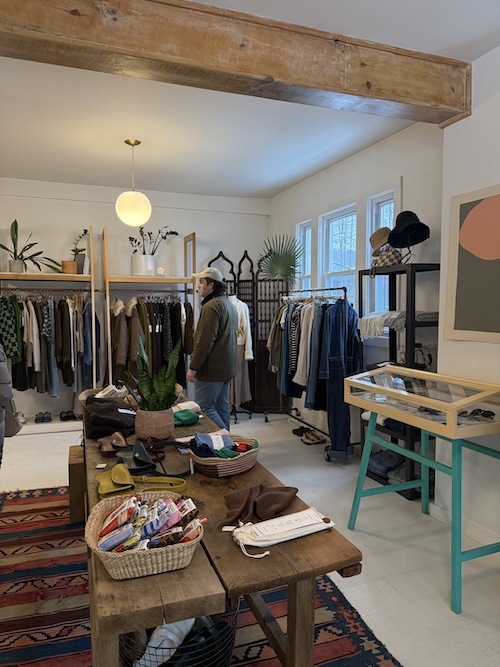
Homestedt was peak Catskills chic, wool sweaters, matte ceramics, candles that smell faintly of pine and smoke. The kind of place where you suddenly believe you need new kitchenware to become your best self.
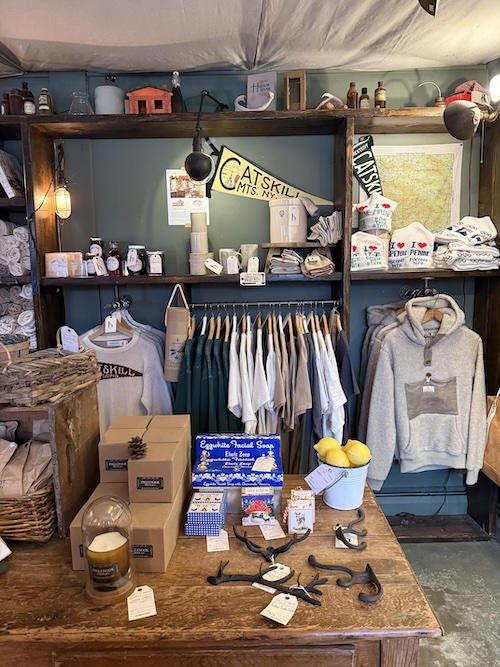
We spent a while inside Corners, a small art and design shop on Main Street that feels more like a gallery than a store. The space is calm and minimal, pale wood shelves lined with art books, prints, and thoughtfully placed objects. We drifted toward the book section and lost track of time flipping through oversized photography and design volumes, the kind that make you want to rethink your entire coffee table. It was the perfect Catskills pause: Warm, quiet, and made for lingering.
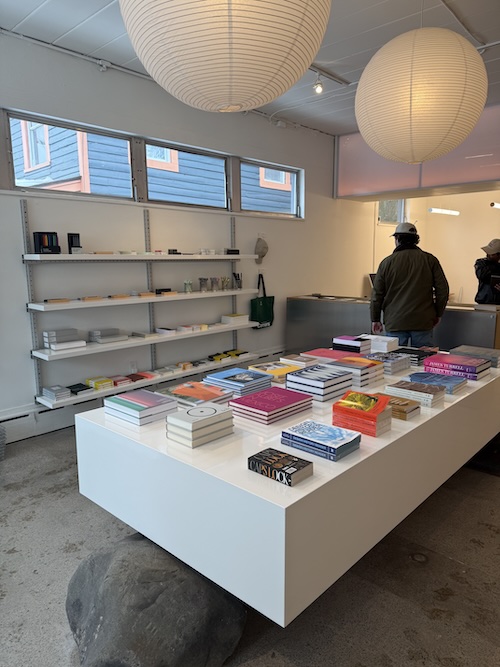
We ended the afternoon at Sunshine Colony for a glass of wine, part general store, part design haven, the kind of space that rewards slow wandering. We tucked ourselves into a cozy corner, surrounded by welcoming plants, the late-afternoon light filtering through the windows. At one point, we struck up a conversation with the couple nearby and discovered they lived in Williamsburg, my neighborhood in Brooklyn. It felt like a funny little moment of familiarity, finding neighbors two hours north in the mountains.
Dinner was at The DeBruce for their Valentine’s tasting menu inspired by the surrounding region. Elegant but not stuffy, thoughtful without being fussy, each course highlighted local ingredients in ways that felt celebratory yet grounded. The pastrami-cured trout with fermented cabbage and rye flatbread was the perfect bite, and the Swiss chard and lamb shank stew with white beans carried a comforting familiarity that reminded me of my youth. Across the table, a newly engaged couple added a little extra sweetness to the evening. After weeks of rushing, sitting over a long, lazy meal felt quietly luxurious.
Sunday in Callicoon
Sunday began with that brave dip in the heated pool, followed by strong coffee and a scenic drive to Callicoon.
We stopped at Jeffersonville Bake Shop, a classic small-town bakery where the glass cases make decision-making nearly impossible. The space had exceptionally chic but completely unpretentious vibes, the kind of place where locals drift in and out with easy familiarity. Sandwiches in hand and coffee in the other, we sank into the rhythm of the morning, listening to people chat and laugh as they moved about. Arguably, the best bite of the entire weekend was Dan’s sandwich on cranberry walnut sourdough, which he’s still thinking about. It was the perfect, unhurried way to start the day.
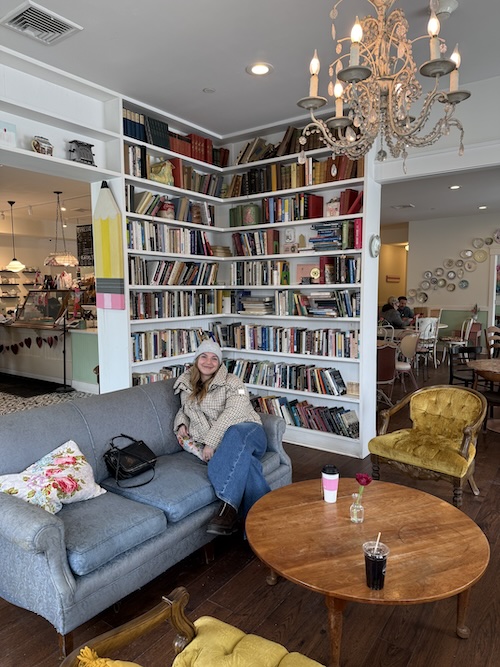
Callicoon’s Main Street invites lingering. Brick storefronts, hand-painted signs, and the Delaware River just beyond. At Lee Hartwell Antiques, the pieces skew elevated, furniture and homewares that feel collected, not cluttered. It’s the kind of place that has you mentally redecorating rooms you do not even own.
At Litt Home & Book, downstairs is a curated collection of children’s toys, and upstairs are books, ranging from popular fiction to a thoughtful selection focused on Jewish history. The space felt personal and intentional.
Kitchen Table delivered what can only be described as a banger cappuccino. We are caffeine addicts, and this weekend fully supported that identity.
Dan disappeared into a rack of vintage jackets at Ragtime Clothing Exchange while I sifted through old photographs and faded pennant flags. At Callicoon Vintage, we perused crates of records, soaking in the chill, easy vibe. There is something quietly intimate about holding fragments of someone else’s history, imagining the stories they carried.
That afternoon, we claimed seats by the fire at The Western Hotel and did not move. Dan taught me how to play chess. I am not saying I won, but I am now emotionally invested. Outside, it was still and inky cold. Inside, it was crackling fire and quiet focus, with a side of a couple of margaritas and a smash burger.
Dinner at The Cabin felt like a warm hug the second we walked in. Wings, classic bar food, and the tradition of tossing a dollar bill onto the ceiling. We asked the waitress about it, and she explained that the bills, weighed with quarters, eventually fall each spring from the humidity and are then given to someone local in need. It is charming and deeply personal, yet inviting, exactly the kind of place that makes you want to come back every winter.
Later, we made s’mores under a starry February sky. The fire was already crackling when we arrived, fueling our competitive streak. He, an Eagle Scout, insisted he had the superior roasting technique. I, a seasoned camp counselor, refused to concede. Between slightly burnt marshmallows and uncontrollable giggling, the night felt warm in every sense. It was exactly the kind of small ritual that makes a weekend unforgettable.
Monday
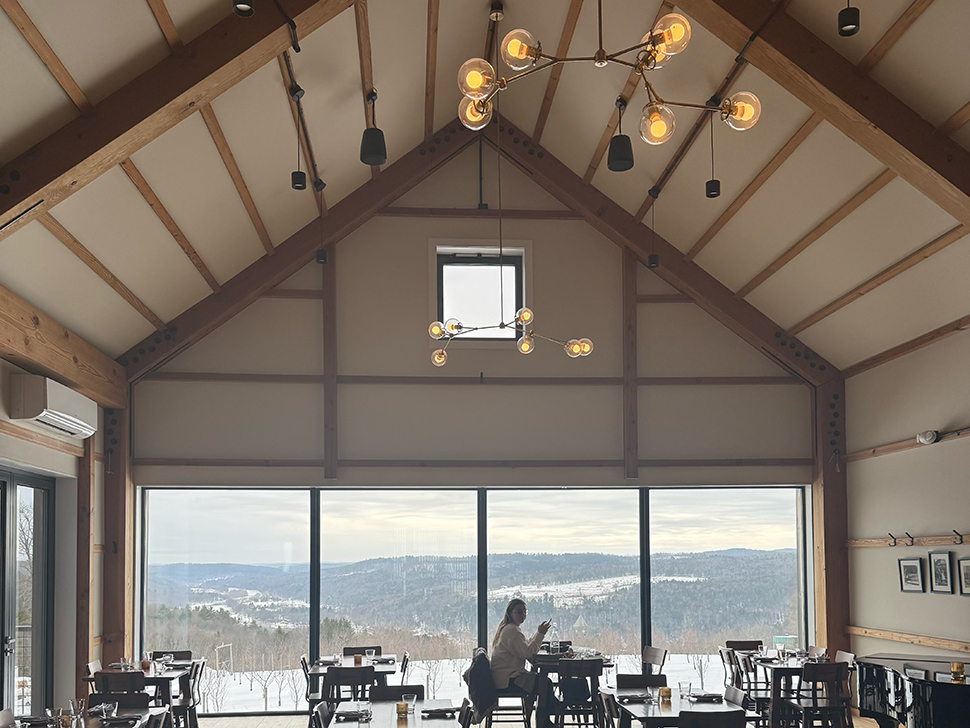
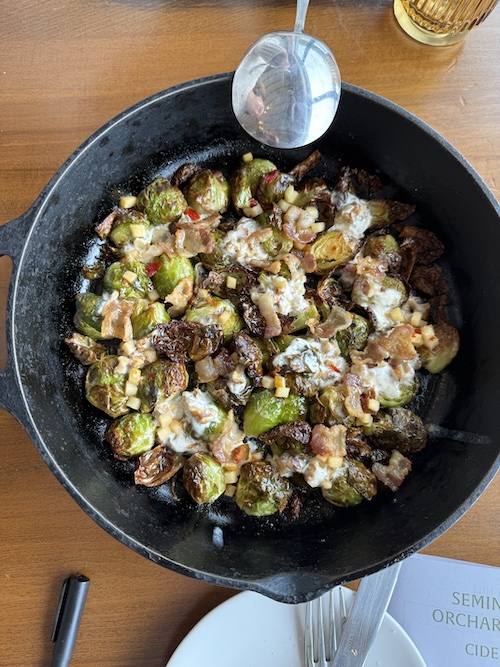
We slept in, no alarms, no urgency, before heading to Seminary Hill, perched above town with sweeping views of the valley below. We ordered a cider flight, each sip bright and crisp against the winter air. Perfectly roasted Brussels sprouts arrived at the table, followed by Chicken Skin, crispy and unpretentious. I devoured the sourdough with cultured butter and whipped chicken fat, indulgent and entirely necessary.
On the way home, my jam band boyfriend made one final pilgrimage to Bethel Woods Center for the Arts, site of the original 1969 Woodstock festival. We walked out to the Woodstock Festival Monument overlooking the field where it all happened. Even in February, nearly empty and hushed, it felt significant.
What struck us most about this pocket of the Catskills, the Yiddish Alps, is how intimate it still feels. Decades after the grand hotels of the Borscht Belt faded, the mountains remain what they have always been, a place to gather, to exhale, to fall a little bit in love with life again. Our version may have included steaming coffees and vintage pennants instead of bungalow colonies and ballroom dancing, but the impulse felt the same.
You may also like: https://the-e-list.com/a-weekend-at-the-hotel-peter-paul-in-new-orleans/