


Hearing Aids Aren’t What They Used to Be: What I Learned from Audiology Concierge
Posted On : October 05, 2026

Today’s hearing aids are nothing like the ones your parents wore—and hearing loss may affect more than you think.
If you’ve started turning up the TV, asking people to repeat themselves, struggling to follow conversations in restaurants, or quietly relying on subtitles, you may have noticed that your hearing isn’t quite what it used to be.
But if your next thought is, “I’m not ready for hearing aids,” you’re not alone.
I recently spoke with Nancy Jablonski, an audiologist who is a partner at Audiology Concierge, and learned that there’s a lot more to hearing than I realized.
Hearing aids aren’t like glasses…
Nancy, who has worked in the hearing-aid industry and trained audiologists for several manufacturers, started her concierge practice after seeing the same problem over and over: people were spending thousands of dollars on hearing aids and still weren’t happy with them.
“Fitting a pair of hearing aids is not like fitting a pair of glasses,” she told me. “There are so many more moving parts.”
That’s why Nancy limits her practice to about 10 new patients a month. She spends time understanding not only the results of a hearing test but how someone actually hears in everyday situations. She’ll even make house calls when necessary.
Patients have 30 days to try their hearing aids. If they don’t like them, they can return them without paying for the devices.
And today’s hearing aids are pretty amazing…
Here’s something I didn’t know: you can stream podcasts, audiobooks, music, and even phone calls directly through many modern hearing aids.
Nancy wears hers all day, including at the gym. She says putting hearing aids on a patient for the first time can be an “aha” moment, like seeing clearly for the first time through a new pair of glasses.
The goal isn’t simply to hear louder. It’s to hear clearly enough that you aren’t constantly thinking about hearing.
What does hearing have to do with your brain?
Quite a bit. When you’re struggling to hear, your brain has to work harder to decode what people are saying—especially in noisy environments. That can leave less mental bandwidth to process and participate in the conversation.
There is also a documented association between untreated hearing loss and cognitive decline, although the relationship is complex.
Nancy’s point is that hearing should be part of the conversation about healthy aging. Sometimes what looks like someone “losing it” may simply be that they’re not hearing the conversation clearly.
And here’s another surprise: your inner ear also plays an important role in balance and spatial awareness.
So why do we put off getting tested?
Like the rest of us, I don’t want to feel old! But by the end of my conversation with Nancy, I’d made an appointment.
I admitted to her that I sometimes struggle to hear in restaurants and have become strangely dependent on subtitles. My daughter always watches television with the captions on, and now I’ve started leaving them on myself.
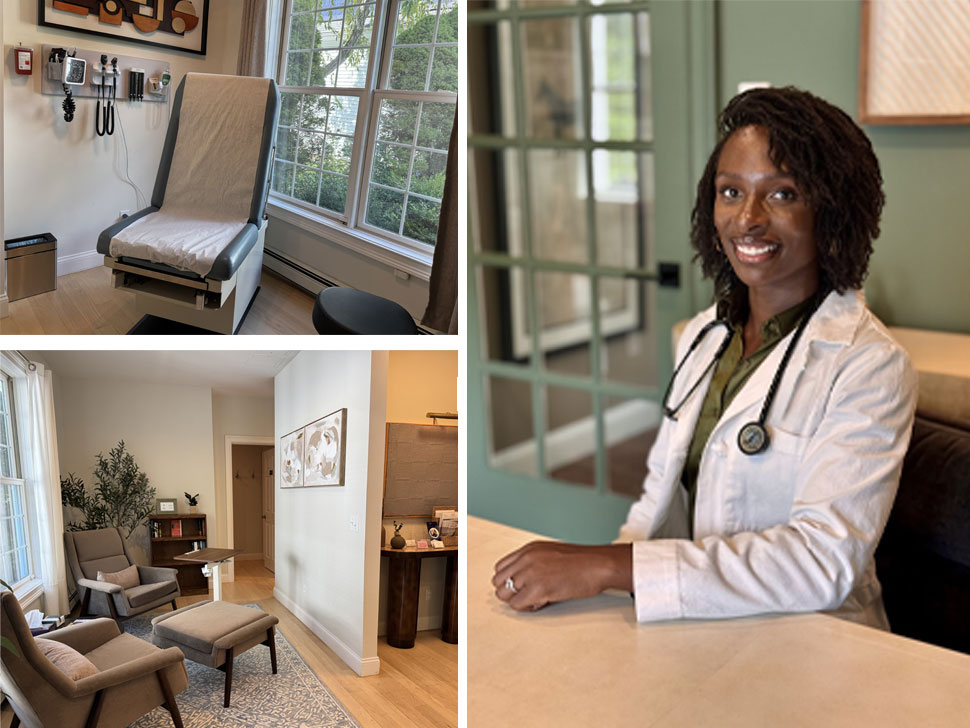
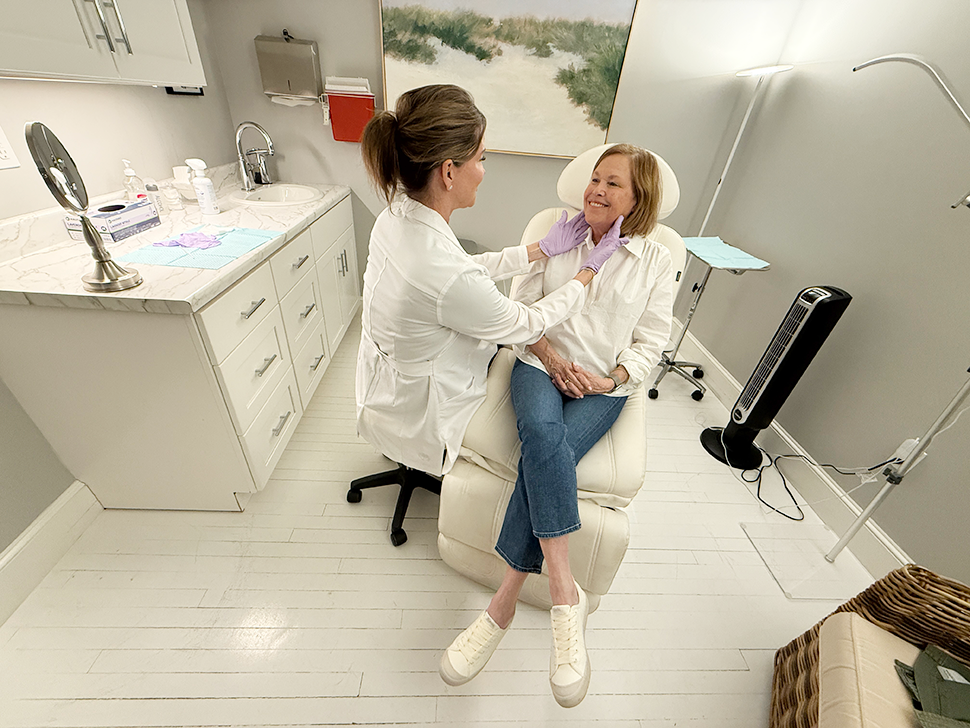
A few days later, I arrived at Nancy’s office, which felt more like a living room than a clinic. Of course, I was a little nervous—the way I am before any test—and I certainly wasn’t looking forward to hearing that I needed hearing aids!
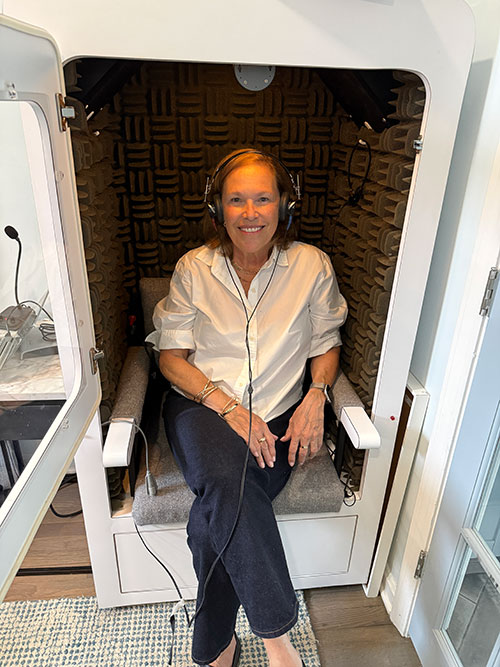
After the standard medical questions, I entered the testing booth. By about halfway through, I was feeling pretty confident that I’d passed. I seemed to be hearing most of the beeps and pings, although the very high and low tones were a little harder to pick up.
And then came the verdict: my hearing is still in the normal range. Yay! I passed—Type A forever!
More importantly, Nancy explained that having a baseline is really valuable. She recommends that everyone have a baseline hearing test around age 50 (oops!) and then check in periodically as they get older.
So, while I may not need hearing aids—yet—I now know where I stand. And I won’t have to wonder whether I’m actually hearing things or just pretending.
Here’s some great news:
Audiology Concierge even brings testing to your home (!)with lots of follow-up and/or adjustments to make sure that your hearing aids are working perfectly for you. They also offer interest-free payment plans and partner with manufacturers to keep costs down.
Insurance and hearing-aid benefits can be confusing, too. Some insurance companies now offer hearing-aid programs, but Nancy says it’s important to understand what you’re actually getting—including follow-up visits and adjustments—not just the price of the devices.
Maybe it’s about quality of life.
Nancy has worn hearing aids for years, and when I asked what she’d say to someone resisting them, she didn’t mince words. Hearing aids, she joked, “just make me not be stupid.” Translation: You don’t have to keep saying “What?” You don’t have to pretend you heard something when you didn’t. You don’t have to blame your grandchildren for talking too fast.
It’s about being able to participate in your own life—and hear the people you love.
And honestly, after my experience, I’d say there’s nothing “old” about wanting to hear life more clearly.
https://audiologyconcierge.com
Old Saybrook